
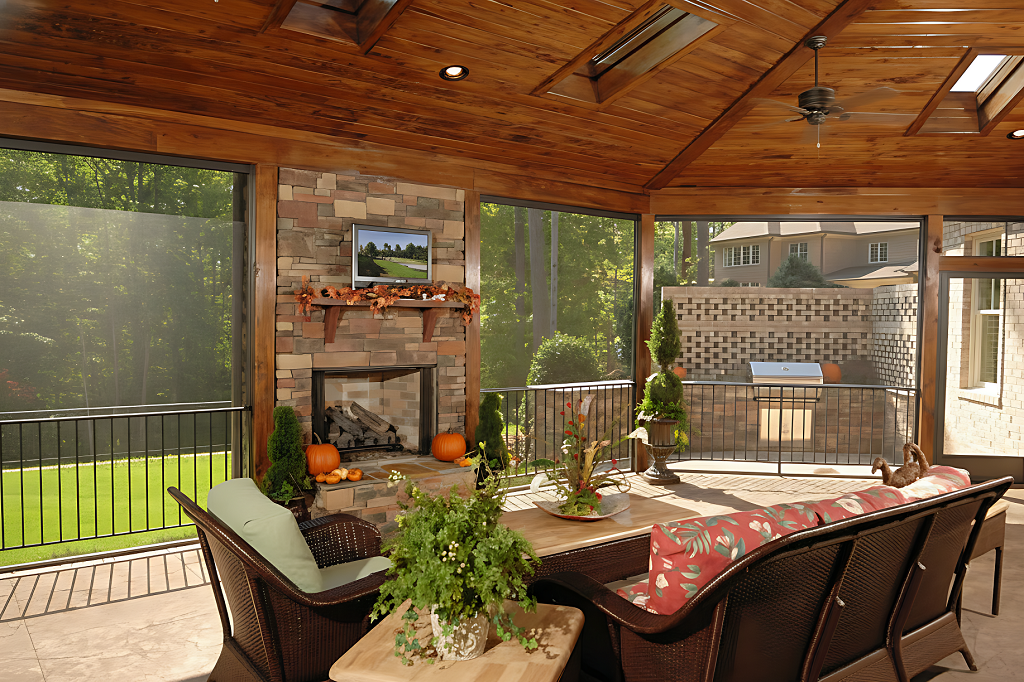
- A four season room is an insulated, year-round space that’s more comfortable and energy efficient than a three-season porch, and building it on a deck is a cost-effective way to expand living space.
- Most projects require permits and inspections, especially when adding structural changes, electrical work, HVAC, or plumbing, so checking local building codes is essential before starting.
- Before building, you must assess your deck’s structural integrity and reinforce it if needed, since walls, windows, insulation, and roofing add significant weight.
- Proper planning includes choosing the right layout, window style, and insulation based on your climate, deck size, and intended use of the room.
- Insulation and a vapor barrier are critical for keeping the room comfortable year-round and preventing moisture problems like mold and rot.
- Heating and cooling options (such as mini-split systems) are necessary for true four-season use, and should be planned before finishing the interior.
- Avoid common beginner mistakes like skipping permits, using low-quality windows, poor sealing, and inadequate insulation—these can cause major problems and extra costs later.
If you love the idea of expanding your living space without adding a full home addition, a four season room on your deck might be the perfect solution. It gives you a cozy, light-filled space to enjoy year-round—without the high cost and time commitment of a traditional build. The key is to plan carefully, use the right materials, and build with energy efficiency in mind so the room stays comfortable in every season.
This beginner’s guide will walk you through the process of how to build a four season room on a deck, from planning and permits to construction and finishing touches.
What Is a Four Season Room and Why Build It on a Deck?

A four season room is essentially an insulated sunroom that can be used year-round. Unlike a three-season porch, which is only comfortable during mild weather, a four season room is built with insulation, proper windows, and often heating and cooling.
Building it on a deck is a smart choice because your deck already provides a sturdy, elevated platform. It can also be a cost-effective way to expand your home without disturbing your existing foundation or major landscaping.
Do You Need a Permit to Build a Four Season Room on a Deck?
Most of the time, yes.
Permit requirements vary depending on your local building codes, the size of the structure, and whether it changes the footprint of your home. Some municipalities treat a four season room as an addition, which means you’ll need permits and inspections for:
- Structural changes
- Electrical wiring
- HVAC installation
- Plumbing (if applicable)
Before you buy materials or start framing, contact your local building department to confirm what you need. This step can save you time, money, and potential legal issues down the road.
What Should You Consider Before You Start?
Before you begin building a four season room, there are a few important decisions to make:
1. How big should the room be?
The size of your four season room depends on:
- The size of your deck
- How many people will use the space
- What you plan to use it for (dining, living area, office, etc.)
A good rule of thumb is to keep it proportional to your home. A room that’s too large can look out of place and may require more structural reinforcement.
2. What kind of foundation does your deck have?
If your deck is older, you may need to reinforce it to support the extra weight of walls, windows, and insulation. You’ll also need to make sure it meets building code requirements for load capacity.
3. What climate do you live in?
Your climate affects how much insulation and what type of windows you need. In colder climates, you’ll need higher-quality insulation and better sealing. In milder climates, you may focus more on ventilation and sun control.
Step 1: Plan Your Design and Layout
The planning stage is where most beginners make or break their project. You want to think through everything from structural needs to aesthetics.
Choose Your Layout
Here are some common layout options:
- Fully enclosed room: This is the most traditional four season room with full walls and windows.
- Screened lower half: Some homeowners choose screens on the lower half for better airflow in warmer months.
- Combination design: Use glass panels for winter and removable screens for summer.
Choose Your Window Style
Windows are a major part of a four season room’s comfort and energy efficiency. Common window styles include:
- Double-hung windows
- Sliding windows
- Casement windows
- Fixed picture windows
Make sure you choose windows with good insulation ratings (look for low U-values and high R-values).
Step 2: Inspect and Reinforce Your Deck
Your deck must be structurally sound before you build anything on top of it. This is not the time to take shortcuts.
Check for Damage
Look for:
- Rotten or soft wood
- Loose fasteners
- Warped or sagging areas
- Poor drainage or standing water
Reinforce if Needed
If your deck is older or not designed for extra weight, you may need:
- Additional support posts
- Stronger joists
- Extra bracing
- A reinforced ledger board connection
If you’re unsure, consult a structural engineer or a professional deck builder. It’s better to invest in reinforcement than risk a collapse later.
Step 3: Build the Frame
Once your deck is ready, you can begin building the frame for the four season room.
Materials You’ll Need
- Pressure-treated lumber for the base
- 2×4 or 2×6 studs for walls
- Top plates and headers
- Anchor bolts and hurricane straps (if required)
- Waterproof flashing
Building the Frame
A typical framing process includes:
- Installing a base plate around the perimeter
- Building wall sections on the ground
- Raising and securing the walls to the deck
- Installing top plates and headers for doors and windows
Make sure your frame is level and square. Even small errors at this stage can cause major issues with doors and windows later.
Step 4: Install Insulation and Vapor Barrier
Insulation is what separates a four season room from a three-season porch. It keeps the room warm in winter and cool in summer.
Best Insulation Options
- Fiberglass batts: Affordable and common, but must be installed correctly.
- Spray foam: Offers better sealing and higher R-values, but more expensive.
- Rigid foam board: Great for walls and can add extra structural strength.
Vapor Barrier
Install a vapor barrier to prevent moisture from getting trapped in the walls. Moisture can cause mold, rot, and insulation failure.
Step 5: Install Windows and Doors

Windows and doors are the most important part of a four season room. They affect comfort, energy efficiency, and overall look.
Tips for Window Installation
- Use proper flashing to prevent leaks
- Seal around the frames with high-quality caulk
- Consider double or triple-pane windows for cold climates
- Add window treatments like blinds or shades for sun control
Door Options
- Standard exterior door
- Sliding glass door
- French doors
- Patio door
Choose a door that matches your design and offers good insulation.
Step 6: Add Heating and Cooling
To truly make your room usable year-round, you need a reliable heating and cooling solution.
Heating Options
- Mini-split heat pump (most popular)
- Baseboard electric heaters
- Radiant floor heating (luxury option)
- Extend your home’s HVAC system
Cooling Options
- Mini-split air conditioner
- Ceiling fan for airflow
- Portable AC (temporary solution)
A mini-split system is often the best option because it provides both heating and cooling and doesn’t require major ductwork.
Step 7: Finish the Interior
Now comes the fun part: making the room feel like part of your home.
Flooring Ideas
- Composite deck flooring
- Tile (great for radiant heat)
- Vinyl plank flooring
- Hardwood (only if properly insulated and sealed)
Wall Finishes
- Drywall with paint
- Tongue-and-groove paneling
- Shiplap for a cozy look
Lighting and Electrical
Install outlets, lighting, and switches based on your layout. Consider:
- Recessed lighting
- Wall sconces
- Pendant lights over a dining table
If you’re not comfortable with electrical work, hire a licensed electrician.
Step 8: Add Exterior Finishing Touches
The exterior of your four season room should blend with your home.
Siding Options
- Vinyl siding
- Wood siding
- Fiber cement siding
Roofing Options
- Extend your existing roof
- Add a separate roof with matching shingles
- Use metal roofing for durability
Gutters and Drainage
Make sure water drains properly away from the deck and foundation. Poor drainage can damage your deck and cause leaks.
What Are Common Beginner Mistakes to Avoid?
Here are a few common mistakes beginners make when building a four season room on a deck:
- Not reinforcing the deck for extra weight
- Skipping permits and inspections
- Choosing low-quality windows
- Not sealing properly around windows and doors
- Poor insulation and ventilation planning
- Forgetting to plan for heating and cooling
Avoiding these mistakes will save you time, money, and frustration.
Is Building a Four Season Room on a Deck Worth It?
Absolutely—if you do it right.
A four season room adds usable living space, increases your home’s value, and gives you a comfortable place to enjoy your outdoor view in any weather. It’s a big project, but with careful planning and the right materials, it’s achievable for a beginner.
Wrapping It Up
Building a four season room on a deck is a rewarding way to expand your living space without the complexity of a full home addition. With careful planning, proper deck reinforcement, quality insulation, and the right windows and HVAC system, you can create a comfortable space that works in every season. While it’s important to follow local building codes and avoid common beginner mistakes, the end result is a versatile room that adds value, comfort, and enjoyment to your home year-round.