
Every outdoor surface around your home is fighting a losing battle against sun, rain, freeze-thaw cycles, and daily wear that indoor floors never have to endure. What looks like a simple crack in a driveway or a faded patio slab is often the early warning sign of a much costlier problem down the road. Understanding why these surfaces age faster, and what you can do about it, helps you budget smarter and avoid emergency repairs.
This guide breaks down the most common outdoor surfaces, why they wear out ahead of schedule, and how to extend their lifespan.
Why Weather Exposure Ages Outdoor Surfaces Faster
Indoor flooring lives in a controlled environment where temperature and moisture barely change from one season to the next. A living room floor might experience a swing of 10 to 15 degrees over an entire year, and humidity stays within a narrow, manageable range thanks to HVAC systems. Outdoor surfaces have no such protection, absorbing direct sunlight, standing water, and temperature swings that can exceed 80 degrees in a single day.
This constant expansion and contraction stresses materials at a molecular level. Concrete, wood, and asphalt all expand when heated and contract when cooled, and repeating this cycle thousands of times over a few years opens hairline cracks that gradually widen. Add freeze-thaw cycles into the mix, where trapped water expands roughly 9% in volume as it turns to ice, and even small cracks can split wide open within a single winter.
UV radiation compounds the problem by breaking down the chemical bonds in sealants, paints, and plastic components, a process called photodegradation that leaves surfaces brittle and faded. Moisture makes things worse still, seeping into porous materials like wood or concrete and encouraging rot, mold, or rebar corrosion from the inside out. Together, these forces lead to cracking, warping, and surface breakdown years before an equivalent indoor material would show similar wear.
Freeze-thaw cycles are particularly damaging in climates that see cold winters, where temperatures swing above and below freezing dozens of times each season. Water seeps into tiny surface pores, freezes, and expands by about 9% in volume, gradually prying the material apart from the inside out. Concrete, brick, and natural stone are especially vulnerable because they’re porous by nature, absorbing moisture every time it rains or snow melts.
Over time, this process, called spalling, turns a smooth surface into a pitted, crumbling one. You’ll typically see it show up first as small surface flakes or hairline cracks, then progress to larger chunks breaking away entirely. A driveway or patio in a northern climate might show visible spalling within 5 to 10 years without proper sealing, while the same material indoors would show none.
Sealants and proper drainage slow this process significantly by keeping water from penetrating in the first place. Sloped grading, sealed joints, and breathable coatings all reduce how much moisture gets trapped in the pores before a freeze. Indoor floors never face this threat at all, since they’re never exposed to standing water or subfreezing temperatures, which is a big part of why they simply last longer.
How Driveway Materials Break Down Over Time
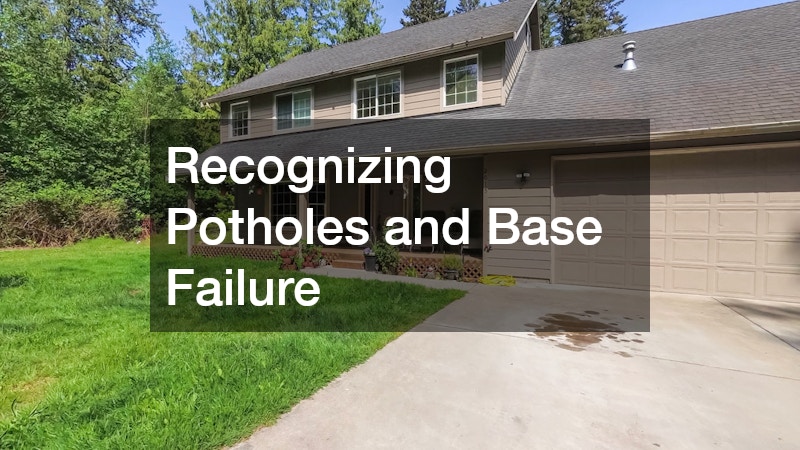
Asphalt is one of the most popular driveway materials because it is affordable and quick to install, but it is also one of the more vulnerable surfaces when it comes to long-term durability. UV rays dry out the oils that keep asphalt flexible, leaving it brittle and prone to cracking within a decade if it is not properly maintained. Regular sealcoating can slow this process significantly, but most homeowners underestimate how often that maintenance needs to happen.
Asphalt paving projects typically need resealing every two to three years to maintain flexibility and resist water infiltration. Skipping this step allows moisture to work its way into small cracks, where it expands during winter and turns hairline fractures into potholes. Property owners who stay ahead of this schedule generally get far more life out of their driveways than those who wait until damage is visible.
What Makes Concrete Patios and Walkways Crack
Concrete is a durable choice for patios and walkways, but it is not immune to the elements. Ground movement, tree root intrusion, and poor drainage are the leading causes of cracking in concrete patios and walkways. Once water finds its way beneath a slab, it can erode the base material and cause the concrete above to settle unevenly.
Hiring experienced concrete contractors for the initial installation makes a measurable difference in how long a surface lasts. Proper base preparation, correct control joint spacing, and adequate curing time all affect how well concrete resists cracking down the road. Cutting corners during installation is one of the most common reasons a patio needs major repair well before its expected lifespan is up.
Why Stamped and Decorative Finishes Wear Differently
Homeowners who want more visual interest than plain gray slabs often choose stamped concrete for patios, pool decks, and entryways. While it delivers the look of stone, brick, or slate at a lower cost, the stamped texture and color sealer are more exposed to foot traffic and weather than a plain finish. Sealant wears away faster in high-traffic zones, and once it is gone, the surface underneath becomes vulnerable to staining and moisture penetration.
Decorative concrete finishes in general require more frequent resealing than standard concrete, often every two to three years depending on sun exposure and traffic volume. Homeowners investing in these upgrades should build resealing into their regular home maintenance calendar. Skipping this step does not just dull the appearance; it shortens the functional lifespan of the entire installation.
- Reseal decorative surfaces every two to three years, depending on exposure
- Watch for color fading as an early sign the sealer is breaking down
- Address small chips quickly before water gets underneath the surface
- Avoid harsh deicing salts, which accelerate surface pitting
How Natural Stone Surfaces Hold Up Outdoors
Natural stone is often marketed as a premium, long-lasting option for patios, walkways, and retaining walls, and in many ways it is more durable than poured surfaces. However, masonry stone still requires proper installation and periodic maintenance to reach its full potential lifespan. Porous stone types like limestone and sandstone can absorb water and suffer freeze-thaw damage just like concrete if they are not sealed correctly.
Mortar joints between stone pieces are often the first point of failure, cracking and crumbling well before the stone itself shows significant wear. Regular inspection of joints, combined with resealing every few years, keeps water from working its way behind the stone face. Property owners who neglect joint maintenance often find themselves paying for a full rebuild instead of a simple repair.
Why Parking Lots and Commercial Surfaces Face Extra Stress
Surfaces that support vehicle weight face a different level of stress than pedestrian walkways or residential driveways. Parking lot paving has to withstand constant traffic, heavy vehicle loads, and repeated exposure to oil and fuel drips that break down surface binders over time. Because these lots are larger and see more use, minor issues can escalate into safety hazards faster than they would on a quiet residential path.
Property owners managing commercial spaces should schedule inspections at least twice a year to catch early signs of rutting, alligator cracking, or drainage pooling. Addressing these issues early is significantly cheaper than a full-depth reconstruction. Working with paving companies that understand local soil conditions and traffic patterns helps ensure the base and surface layers are built to handle the intended load from day one.
How Loose Aggregate Surfaces Compare to Solid Paving
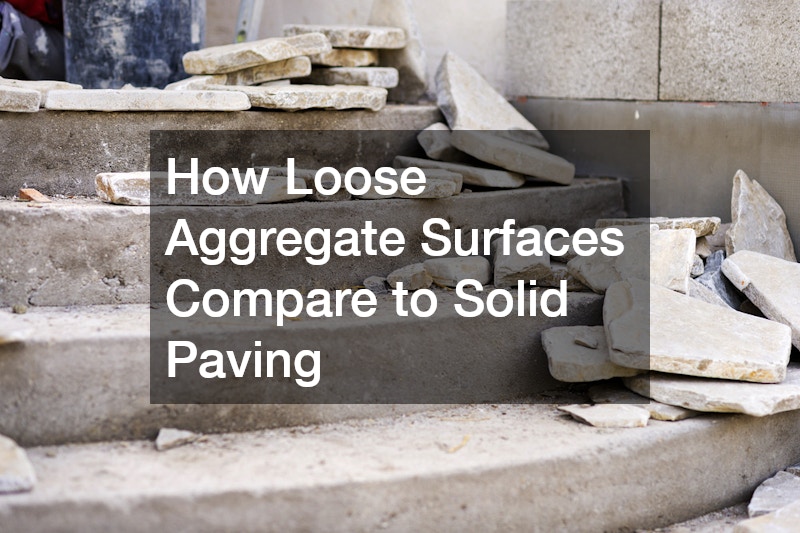
Gravel paths, driveways, and drainage beds behave very differently from solid paved surfaces, and their maintenance needs are just as different. Because gravel is not bonded together, it shifts, compacts unevenly, and gradually migrates due to rain runoff and vehicle traffic. On a driveway that sees daily car traffic, this migration often shows up as ruts in the tire tracks and a buildup of loose stone along the edges within just a few months.
Solid paving like concrete or asphalt is designed to stay put for years with minimal intervention, but gravel surfaces lose material continuously and need replenishment to maintain consistent depth and coverage. A working gravel bed typically needs 2 to 4 inches of stone to function properly for drainage or walkability, and that depth can thin out significantly after a single rainy season. Low spots, wash-out zones near downspouts, and high-traffic entry points tend to lose material fastest and need attention first.
Periodic gravel delivery and redistribution is a normal part of maintaining these surfaces rather than a sign that something has gone wrong. Raking loose stone back into thin or bare patches every few months, combined with a fresh gravel delivery once or twice a year, keeps the surface even and prevents mud from showing through. Skipping this upkeep doesn’t just look neglected — it also undermines drainage function, since thinning gravel beds allow water to pool and erode the base layer underneath.
The upside of loose aggregate is that it drains well and rarely cracks the way solid surfaces do, which makes it a popular choice in wet climates or areas with drainage challenges. Water simply filters through the gaps between stones instead of pooling on top or seeping beneath a slab to cause frost heave, so gravel driveways tend to hold up better through freeze-thaw cycles than concrete or asphalt.
The tradeoff is that it needs replenishing every few years as material gets displaced or washed away. Tire ruts, snowplowing, and heavy rain runoff gradually push gravel toward the edges of a driveway, thinning the coverage in the center and creating low spots where puddles form. Most homeowners top off their gravel every two to four years, adding one to two inches of fresh material at a cost that typically runs several hundred dollars depending on driveway length and stone type.
Homeowners who choose gravel for long driveways or rural properties should plan for this ongoing cost rather than treating it as a one-time installation. It also helps to budget for occasional grading, which redistributes existing stone and smooths out ruts between full top-offs. Choosing angular crushed stone over rounded river gravel can reduce how often replenishment is needed, since angular pieces interlock and resist scattering far better than smooth, rounded stones.
When Surface Cleaning and Restoration Can Extend Lifespan
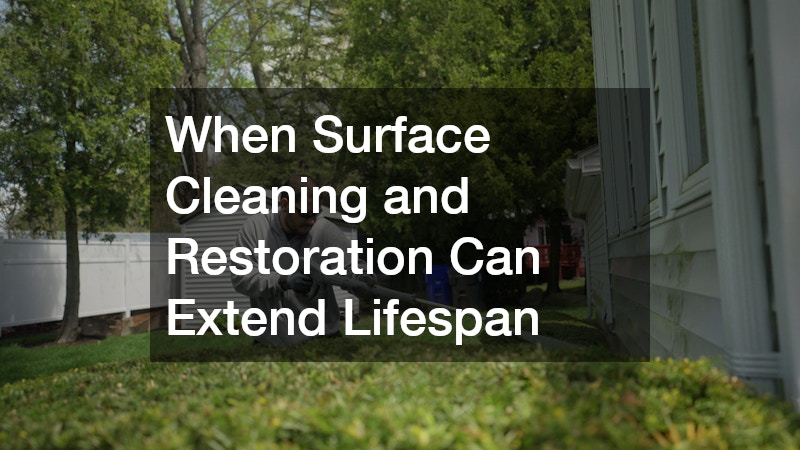
Not every worn surface needs to be torn out and replaced. In many cases, professional cleaning and restoration methods can bring back both the appearance and function of an aging surface for a fraction of the cost of full replacement. The right approach depends on the material, the extent of the damage, and what’s causing the deterioration in the first place.
Sandblasting is one option used to strip away old sealant, paint, or grime from concrete and stone surfaces without damaging the material underneath. By adjusting the abrasive media and pressure, contractors can remove years of buildup from a patio or driveway while leaving the underlying surface intact, giving them a clean base to apply new sealer or coating.
Other restoration methods serve similar purposes on different materials. Pressure washing works well for decks and pavers where grime and mildew sit on the surface rather than deep within it, while chemical strippers can lift stubborn coatings from wood without the abrasiveness of sandblasting. For surfaces with minor cracking or pitting, patching compounds combined with a fresh sealant coat can add several years of usable life.
Homeowners should weigh the age and condition of the surface before committing to restoration. A concrete slab with surface-level staining or a worn sealant layer is a good candidate for cleaning and resealing, but one with deep structural cracks or significant settling likely needs replacement regardless of how well it’s cleaned.
Restoration work like professional cleaning, sealing, and spot repair typically costs a fraction of full replacement — often 20% to 40% of the price — while adding several years to a surface’s usable life. Pressure washing a concrete driveway, for example, might run a few hundred dollars, compared to several thousand for a full tear-out and repour. That kind of cost gap makes routine restoration one of the highest-value maintenance investments a homeowner can make.
This approach is especially effective on masonry and stone surfaces, where staining, efflorescence, and mildew buildup accumulate gradually and respond well to targeted cleaning. Brick walkways, stone patios, and retaining walls in particular tend to look dramatically better after a deep clean and resealing, since the porous material holds onto grime that surface-level rinsing can’t remove. Efflorescence — that chalky white mineral residue — can often be dissolved with the right acidic cleaner rather than requiring replacement of the affected stone.
Homeowners should still consult a professional before attempting this kind of restoration themselves, since improper technique can etch or pit certain softer materials like limestone, sandstone, or aged concrete. Using too high a pressure setting, the wrong cleaning chemical, or an incompatible sealant can cause damage that’s more costly to fix than the original staining. A professional assessment can also catch underlying issues — like cracking or drainage problems — before they turn a simple cleaning job into a much larger repair.
Conclusion
Outdoor surfaces will always wear out faster than anything protected indoors, but understanding why helps you plan ahead instead of reacting to a crisis. Regular sealing, timely repairs, and choosing the right material for your climate and usage all play a role in getting the most value out of your investment. Before your next crack turns into a full replacement project, take stock of which surfaces around your property are due for inspection or maintenance.